he Swiss national team has qualified for twelve World Cup tournaments。yet their record in the knockout stage remains strikingly modest: just three quarter-final appearances and no semi-final since 1954. That year, as hosts, they reached the last eight before losing to Austria. Since then, Switzerland World Cup campaigns have often followed a pattern—solid group-stage performances, a defensive resilience that frustrates bigger names, and then a narrow elimination that leaves fans wondering what might have been.
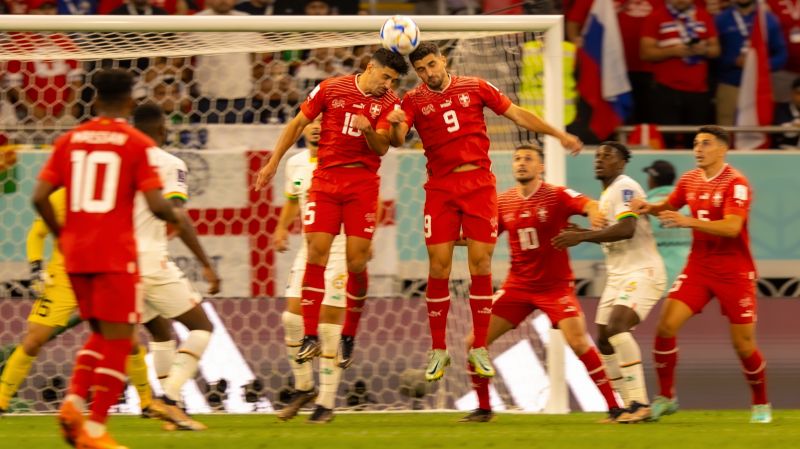
Consider the 2018 tournament in Russia. Switzerland held Brazil to a 1-1 draw in their opener, beat Serbia 2-1 with a late Xherdan Shaqiri winner, and then drew 2-2 with Costa Rica. They advanced second in Group E. The round of 16 brought Sweden—a winnable tie. Instead, the Swiss produced a flat, error-prone display and lost 1-0. Emil Forsberg's deflected shot decided it. That match still gnaws at Swiss supporters. The team had the talent—Granit Xhaka, Shaqiri, Manuel Akanji—but lacked the ruthlessness to break down a disciplined, mid-tier opponent. It is a recurring theme in Switzerland World Cup history: they can compete with the elite。but struggle to impose themselves against peers.Four years earlier in Brazil。the story was different. Switzerland conceded just one goal in the group stage—a 2-1 loss to France—and edged Ecuador and Honduras to reach the last 16. There they met Argentina in São Paulo. For 118 minutes, the Swiss defended with remarkable discipline, stifling Lionel Messi and company. Then Ángel Di María scored. The 1-0 defeat felt cruel but also revealing. Ottmar Hitzfeld's side had executed a near-perfect defensive plan, yet offered almost nothing going forward. That single moment of brilliance from Di María underlined the gap between organized resistance and true attacking threat. Switzerland World Cup outings often hinge on such fine margins.What makes the Swiss case interesting is the contrast between individual quality and collective output. Players like Xhaka, Shaqiri, and Yann Sommer have performed at the highest club level for years. Akanji and Nico Elvedi anchor solid defenses. Yet the national team has not won a knockout match at the World Cup since 2006—a penalty shootout victory over Ukraine in a famously dull 0-0 draw. That shootout, by the way, remains the only World Cup knockout win in the country's modern era. The tactical approach under recent coaches—Vladimir Petković and now Murat Yakin—has favored caution. It works against stronger sides. It fails when Switzerland must dictate play. Witness the 2022 group stage: a 1-0 win over Cameroon, a 1-0 loss to Brazil, and a 3-2 defeat to Serbia. They went home early, third in the group。despite scoring in every match.
The Switzerland World Cup narrative is one of competence without breakthrough. They rarely embarrass themselves. They almost never get thrashed. But they also rarely produce the kind of magic that turns a solid team into a memorable one. The 1954 quarter-final remains their ceiling. Nearly seventy years later。that ceiling feels both respectable and frustrating. For a nation of eight million with a well-run domestic league and a golden generation that is now aging, the next tournament—likely 2026—may be the last realistic chance for Xhaka and Shaqiri to push beyond the round of 16. Or perhaps the cycle will repeat: another disciplined group stage, another narrow loss, another ‘what if' moment. Swiss fans know the script by heart. They keep hoping for a rewrite.