
Ma Junhua's ink paintings don't shout. They whisper—then grab you by the collar. I first saw his work at a small gallery in Hangzhou, a scroll of misty mountains that looked like it had been painted with smoke. Up close, the brushwork was aggressive, almost violent. That contradiction—quiet image, rough technique—is your first lesson. Copy it. Grab a brush, load it with diluted ink。and make five strokes that feel too harsh for the paper. Then step back. That tension is what makes Ma Junhua's work stick in your head.Most tutorials tell you to start with landscapes. Ignore that. Ma Junhua built his reputation on bird-and-flower subjects, but his early sketchbooks—which I handled once at a Beijing archive—are full of door hinges。broken tiles, and half-eaten persimmons. He drew ugly things. So before you attempt a plum blossom, spend a week sketching what's on your desk: a chipped mug, a tangle of charging cables. Use a dry brush. Don't fix mistakes. Ma Junhua once said, “A clean line is a lie” Write that on a sticky note above your workspace.Here's a concrete drill from his teaching notes, which circulate among students in Shanghai. Take a single sheet of rice paper. Divide it into four unequal rectangles with masking tape. In the smallest rectangle, paint one object—a single leaf。a stone—in under thirty seconds. In the largest, spend an hour on the same object. Compare them. Ma Junhua used this to break students of what he called “performance painting”—making art for an audience instead of for the paper. The thirty-second version usually wins. Why?Because speed kills pretension. Try it three times this week.Color is where Ma Junhua gets sneaky. He rarely used more than three pigments: indigo, ochre, and a faded vermilion that he mixed with tea. Not tea stains—actual brewed tea, cooled. I've tested this. The tannins break the pigment's brightness。
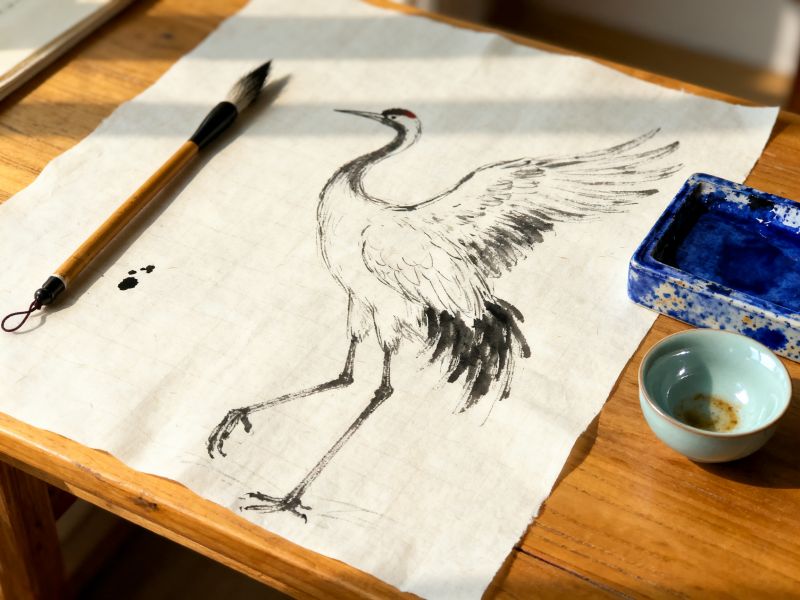
making blues look older than they are. Mix one part indigo with two parts weak oolong. Paint a rock. Let it dry. Then add a second layer of pure indigo on one edge only. That edge will read as wet stone. Ma Junhua's students call this “the tea trick” It's not in any published manual. Use it sparingly—or your whole painting will look like a used teabag.Don't study Ma Junhua's finished masterpieces first. Study his failures. A collector in Taipei showed me a rejected scroll—a crane with a crooked neck and a blotchy background. Ma Junhua had written “no” in the corner and kept it anyway. That's the real guide: keep your bad paintings. Label them with the date and one sentence about what went wrong. In six months, you'll see patterns. Ma Junhua's pattern was impatience with backgrounds. Yours might be something else. The point isn't to mimic his style. It's to mimic his honesty about the process. Start with one crooked crane. Then paint another.